Learn about the benefits of colored concrete patios and get answers to frequently asked questions.
Posted 5/27/2026
A patio is more than just an outdoor surface. It’s a place where you can gather, relax, entertain, and enjoy your backyard. Adding color is one of the easiest and most cost-effective ways to transform a plain concrete patio into a decorative outdoor living space that feels warm, inviting, and customized to your home.
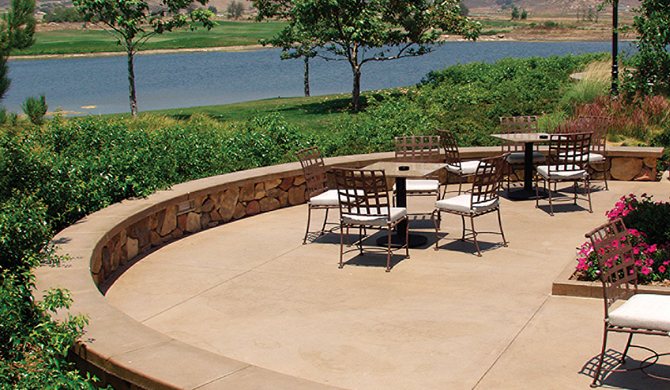
Adding color to concrete patios improves appearance and creates an outdoor space that feels intentional and cohesive. Here are some of the biggest advantages of colored concrete for patios:
Pro Tip: Ask your contractor about UltraFiber 500, a fiber additive that reduces shrinkage cracking, improves durability, and is fully compatible with decorative coloring systems. It disperses cleanly without surface fuzz or blemishes, which matters on a colored finish. Especially worth considering in climates with frequent temperature swings.
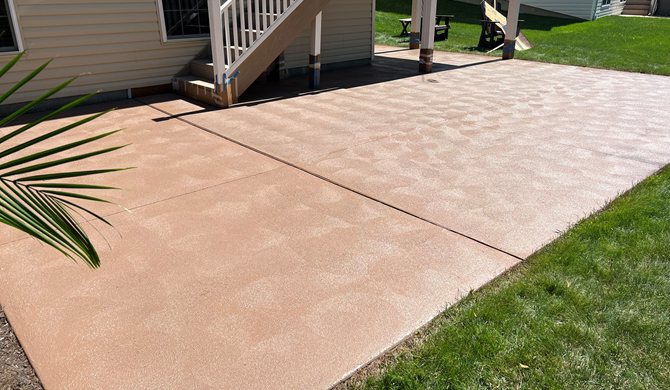
When planning a concrete patio, you might be asking:
The answers to these questions depend on your home’s exterior, landscaping, climate, and personal style. With integral color, you can choose from earth tones, warm browns, soft grays, and bold accent colors to complement your home and landscaping.
Gray tones remain a favorite for patios because they create a clean, versatile foundation for outdoor furniture and landscaping.
Warm browns, tans, and beige shades are especially popular for patios because they blend naturally with outdoor environments.
These colors pair well with:
Muted red and terracotta colors can create warmth and character in outdoor living spaces. These shades often complement Mediterranean, Spanish-style, and Southwestern homes particularly well.
To get more concrete patio color ideas and find patio color schemes, look at patios in local neighborhoods, outdoor living magazines, or landscaping inspiration galleries. Consider how the color will look alongside your home’s siding, roofing, plants, and outdoor furniture.
The Solomon Colors Color Laboratory allows you to coordinate your patio design with existing hardscapes, pool decks, retaining walls, or architectural accents for a more cohesive outdoor design. The Color Lab team works with your contractor to develop a custom integral color blend for your patio.
For existing surfaces, Brickform Cem-Coat Plus gives you a topical option. It's an opaque, cement-based coating that can be colored to match or tie together adjacent concrete surfaces. Either way, always do a job site mockup before committing.
There are several methods concrete contractors use to color concrete patios, but integral color is one of the most common and most effective for new concrete installations.
Integral coloring involves adding pigment directly into the concrete mix before placement. Because the entire slab is colored throughout rather than just being a topical color solution, the patio maintains a more consistent appearance over time.
Other coloring methods include:
Integral color and color hardeners are used for newly poured patios, while concrete stains and dyes are commonly applied to existing concrete surfaces (Learn more: Color Hardener vs. Integral Color). No matter which coloring method is used, it’s always smart to request a sample or mockup beforehand.
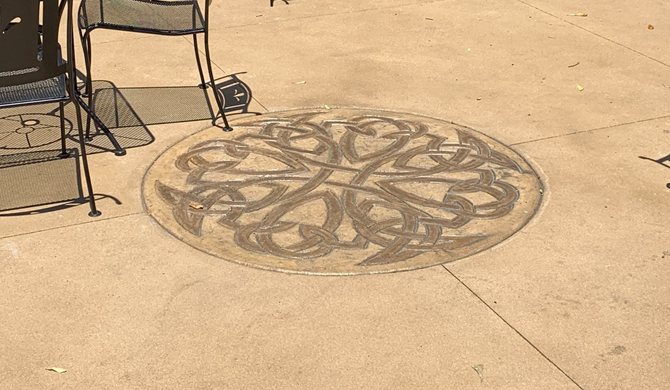
Colored concrete patios can be customized even further with decorative concrete treatments and finishes.
Popular options include:
Did You Know? A color-enhancing sealer doesn't just protect your patio from weather exposure, it also deepens the appearance of the color and adds a glossy, wet-look finish. Learn more about sealing colored concrete.
From the Brickform blog: Stamped Concrete Patios
Both have advantages depending on your climate and design goals.
The best choice depends on how you use the space and the overall style you want to achieve.
When installed properly and maintained regularly, colored concrete patios can last for decades. Longevity depends on factors such as climate conditions, installation quality, UV exposure, and ongoing maintenance.
Using reinforcement fibers and quality sealers can help improve durability and reduce the likelihood of cracking.
Yes. Existing patios can often be updated using stains, dyes, tinted coatings, or resurfacing systems. These options allow you to refresh older concrete without fully replacing the slab.
High-quality coloring systems made with UV-stable concrete pigments are designed to resist fading for many years. Proper sealing and routine maintenance help preserve color vibrancy and protect the surface from weathering.
Routine maintenance for a colored patio typically includes:
With proper care, a colored concrete patio can remain attractive, durable, and functional for many years.
Concrete can become slippery when wet, especially if a glossy sealer is used. However, contractors can add textured finishes or slip-resistant additives to improve traction and make patios safer for everyday use.
Sealing a colored concrete patio is highly recommended. While concrete can technically remain unsealed, applying a quality sealer helps protect both the color and the surface itself from everyday wear and exposure.
Outdoor patios are constantly exposed to sunlight, moisture, dirt, foot traffic, spills, and changing temperatures. A sealer acts as a protective barrier that helps preserve the appearance and durability of the concrete over time.
See recommended sealers from Brickform.
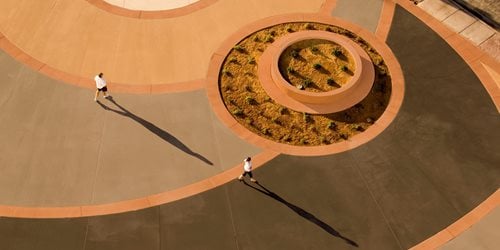
Everything you need to know about adding color to concrete—from selection to installation and maintenance.
Learn why fiber reinforced concrete is ideal for decorative work.
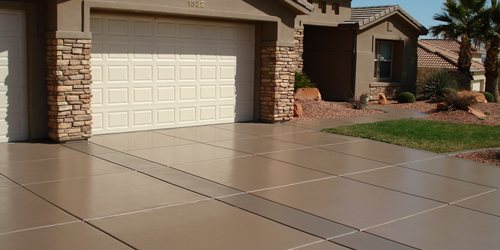
Learn about the benefits of coloring your concrete driveway and get answers to frequently asked questions.
Explore impressive concrete installations to find inspiration for your next project.
Find out how much color and fiber you'll need for any size project.