Learn why sealing colored concrete is crucial to protect your decorative concrete work and get information on the right products to use for the best results.
Posted 3/10/2026
Integrally colored concrete has color running all the way through the slab. It's durable and won't peel or fade. But that doesn't mean it takes care of itself. This guide covers why sealing matters, how to pick the right product, and what to get right during application.
Technically, no. Unsealed concrete won't crumble. But, if you want the color to look good for the long haul, sealing is non-negotiable. Here at Solomon Colors, we always recommend sealing colored concrete to extend its life and preserve its appearance.
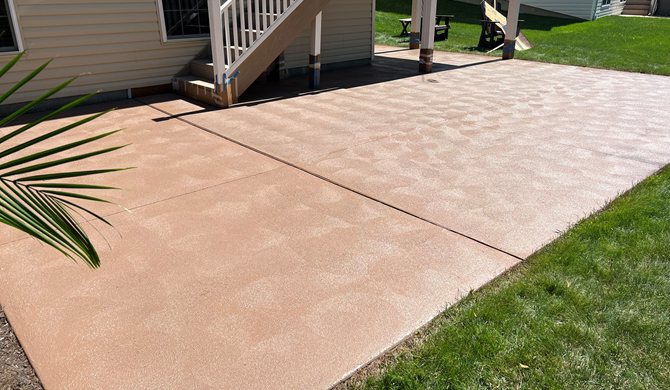
Sealer does two things for colored concrete: it protects the surface and enhances the color. Skip it, and you give up both.
To understand why sealer matters, you need to know how colored concrete actually works. Concrete is made of four ingredients: sand, aggregate, cement, and water. The cement paste holds everything together, and it's what you see on the surface. It's also what gets colored. Sand and aggregate can't be pigmented, so we color the cement.
When that top layer of paste wears down from foot traffic and weathering, it exposes the uncolored sand and aggregate underneath. The color is still in the slab. It's just not what you're looking at anymore. Sealer slows that wear significantly.
The other thing sealer does is bring the color forward. Without it, even a freshly cured slab can look flat or muted. A good sealer adds depth and richness to the surface.
Did You Know? Solomon pigments are ASTM C979 compliant and designed to hold up against UV, weather, and water. Integral color doesn't fade. When colored concrete looks dull or washed out, it's almost always a sealer issue, not a pigment issue.
Surface wear is a big threat to colored concrete, but it's not the only one. The sealer isn't protecting the pigment. It's protecting the concrete surface that reveals the color. A properly applied sealer helps:
Choosing the right sealer matters more than you might think. The best choice matches your project's performance requirements and appearance goals. Here are the main factors to think through.
The first decision is how you want the surface to look after sealing. Do you want a wet, glossy finish, or something closer to the natural appearance of the concrete? There are two categories to choose from.
Film-forming sealers sit on top of the concrete surface and deepen the color, giving it a rich, wet look. If you want your colored concrete to really pop, this is the category to look at.
Pro tip: Always create a test slab.
“Our color chart shows unsealed concrete, and applying a sealer, especially an acrylic that forms a film, will deepen the shade. That’s why we recommend pouring and approving a test slab before starting the job.”
— John Reynolds, Solomon Colors Technical Expert
Penetrating sealers work differently. Instead of forming a film on the surface, they bond within the concrete itself. They protect against moisture, staining, and wear without dramatically changing the way the surface looks. If you want a more natural appearance, this is where to start.
Learn more about penetrating sealers.
Other important considerations for sealers
Pro tip: Compare a shaded spot to one that gets full sun.
“A shaded patio tells the story well. If part of your concrete sits under a deck, that section will still look rich and deep years later. The exposed section will look dull and worn, where UV rays have broken down the sealer.”
— Josh Cunningham, Solomon Colors Technical Support

When sealing your colored concrete surface, there are several important factors to keep in mind.
How well your sealer performs comes down to how well you prep the surface. Before sealing, the concrete needs to be clean, dry, and free of any existing sealer, paint, or contaminants. If you're resealing and don't know what sealer is already on the surface, strip it first with Strip-It.
Pro tip: Pressure washing won't cut it.
A pressure wash can make concrete look clean, but it's not enough before a fresh sealer application. You need to get the pores open. Use E-Etch to profile the surface and Neutra Clean to get the pH back to normal. That gives the sealer the best chance of bonding properly.
— Antonio Thomas, Solomon Colors team member
Two things will cause a sealer application to fail: moisture and heat.
Apply to a dry surface. If the slab is damp or humidity is high, moisture can get trapped between the concrete and the sealer. This causes whitening (efflorescence) and can lead to delamination. Don't apply if rain is in the forecast.
Heat is the other problem. Applying in direct midday sun on a hot day causes bubbling and a weak film. Morning or evening applications are better in warm weather.
Pro tip: Thin to win.
“When sealing colored concrete, bubbles can show up when the sealer is applied too heavily. The key to avoiding that is applying several thin coats.”
— John Reynolds, Solomon Colors Technical Expert
Concrete takes approximately 28 days to fully cure. Sealing too early traps moisture and compromises the sealer bond.
If the project schedule requires sealing right away, use Gem Cure and Seal. It's a curing and sealing compound designed to be applied immediately after final finishing.
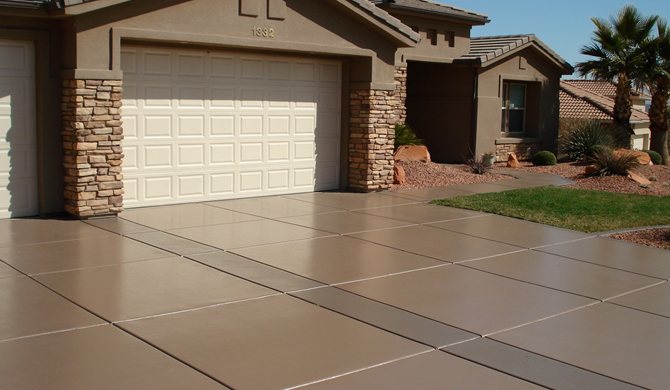
Sealer wears out, the color in the concrete doesn't. When sealer goes, you lose both the protection and the color enhancement.
How to check: Pour a small amount of water on the surface. If it beads up, the sealer is still working. If it absorbs quickly and darkens the spot, it's time to reseal. Still not sure? A contractor can test with a small amount of acid to get a definitive answer.
Plan on resealing every three to five years. How often you actually need to depends on:
Regular cleaning extends the life of your sealer. A light pressure wash handles surface dirt well, but check the sealer's condition first. If it's already peeling or flaking, pressure washing can remove it entirely. For a deeper clean, Neutra Clean is formulated for decorative concrete and won't damage the sealer.
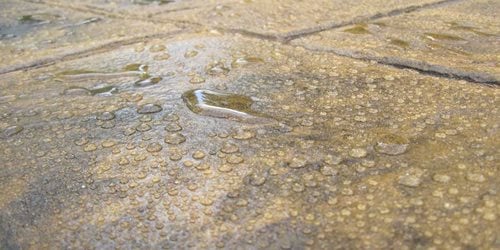
Learn why stamped driveways, patios, and sidewalks need sealer to maintain long and attractive use.
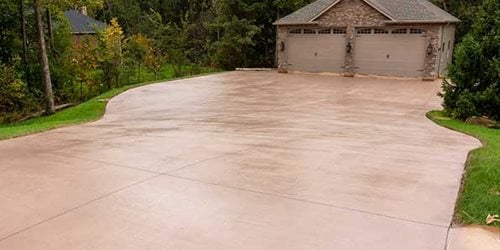
Get tips for correcting color issues with a tinted sealer or using it to add color to gray concrete.
Everything you need to know about adding color to concrete—from selection to installation and maintenance.
Explore impressive concrete installations to find inspiration for your next project.
Find out how much color and fiber you'll need for any size project.