SRI-rated colors, overlays, and other ways to keep your concrete comfortable.
Updated 7/21/2026
Cool concrete isn't just neat. It's literally cool! Who hasn't had the experience of sprinting over a scorching hot concrete pool deck? Concrete heats up a lot when exposed to heat and sunlight. This makes it very unpleasant to touch or be around. It also contributes to various environmental problems. In this article, we will talk about how and why to make cool concrete.
The reasons behind this are well studied and documented by organizations and engineers around the world.
Yes, concrete absorbs heat quickly and stores it for hours. This is why concrete pool decks, patios, and driveways can feel warm well into the evening. The same properties that make concrete durable also make it an efficient heat sponge.
Concrete's heat-absorbing behavior comes down to three factors:
It is not uncommon for high heat, high sun regions to see concrete achieve surface temperatures approaching 150 degrees Fahrenheit. To make matters worse, concrete retains heat very well. It can remain very hot for hours after ambient temperatures start to decline.
Real-world measurements back this up. A University of Nevada, Las Vegas study found pavement in direct sunlight reaching 147°F on a 111°F day. That's hot enough to cause second-degree burns in just two seconds.
Hot concrete causes real discomfort and has effects beyond your own backyard:
Changing color is the easiest way to make cool concrete. Concrete with a light color will reflect more sunlight and absorb less heat. This effect is measured using a figure called Solar Reflectance Index (SRI). This number is determined by the standards found in ASTM E1980-24. The higher the number the more solar energy is reflected.
New gray concrete usually has an SRI value of 35, while asphalt can have an SRI value as low as 0. SRI values can be found for selected colors on the color card for your chosen Solomon Colors or Brickform integral color. By using one of these SRI rated colors, your concrete will be cooler to the touch and contribute less to the heat island effect. LEED credits can be earned for achieving a minimum SRI value on different applications.
💡 Did You Know? The higher the SRI, the cooler the slab. Bumping SRI from 35 (standard gray) to the mid-50s (Shell, SRI 56) typically keeps a slab about 10–25°F cooler under peak summer sun.
There are a few ways to lighten the color of concrete, cooling the surface. For new concrete, you can use integral colors or a dry shake color hardener. Color hardeners can create more vivid, brighter colors. With Color Hardener, you can make white concrete without the hassle or expense of using white cement or sourcing light colored sands. However, Color Hardeners require more labor and they can't readily be used to color vertical surfaces, so they are mostly relegated to specialty pavement and residential use. Integral colors are more versatile as they can be used in almost any concrete application. Integral colors are also more likely to be given an SRI value.
Existing concrete can be given these same characteristics using an overlay or opaque coloring product that have been given a light color. This is a great option for restoration projects.
Here are a couple effective options from our Brickform line of decorative products:
Need in-depth guidance on how to change the color of your concrete?
Read the full how-to guide on the Brickform blog
In addition to smart color choices, you can layer on these quick cooling upgrades for even more comfort:
Concrete can't stay completely cool in direct sun, but light-colored, high-SRI concrete stays noticeably cooler than standard gray. Options like SRI-rated integral colors, color hardeners, or a titanium-dioxide white mix (SRI 80–90) can keep a slab dramatically cooler, especially on pool decks and patios.
In direct summer sun, concrete surfaces commonly run 30–50°F hotter than the surrounding air. On an 80°F day, that means a standard gray slab can reach 110–130°F or higher, depending on color, sun exposure, and surface finish. Lighter, high-SRI colors stay meaningfully cooler under the same conditions.
Yes, stamped concrete heats up the same way any concrete does. Color is still the biggest factor, so choosing a high-SRI stamped color (or a color hardener) keeps a stamped patio or pool deck cooler, just like standard flatwork.
Cured concrete holds up well to heat and sun exposure long-term. Cracking is more commonly linked to freeze-thaw cycles in winter than to summer heat. Routine sealing protects color, prevents UV fading, and helps guard against moisture intrusion.
Everything you need to know about adding color to concrete—from selection to installation and maintenance
Find out how to choose the right stamped concrete color for any job
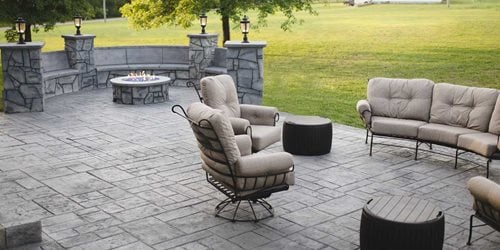
Gray stamped concrete is under-appreciated. With all the colors possible, sometimes gray is the most versatile.
Explore impressive concrete installations to find inspiration for your next project.
Find out how much color and fiber you'll need for any size project.