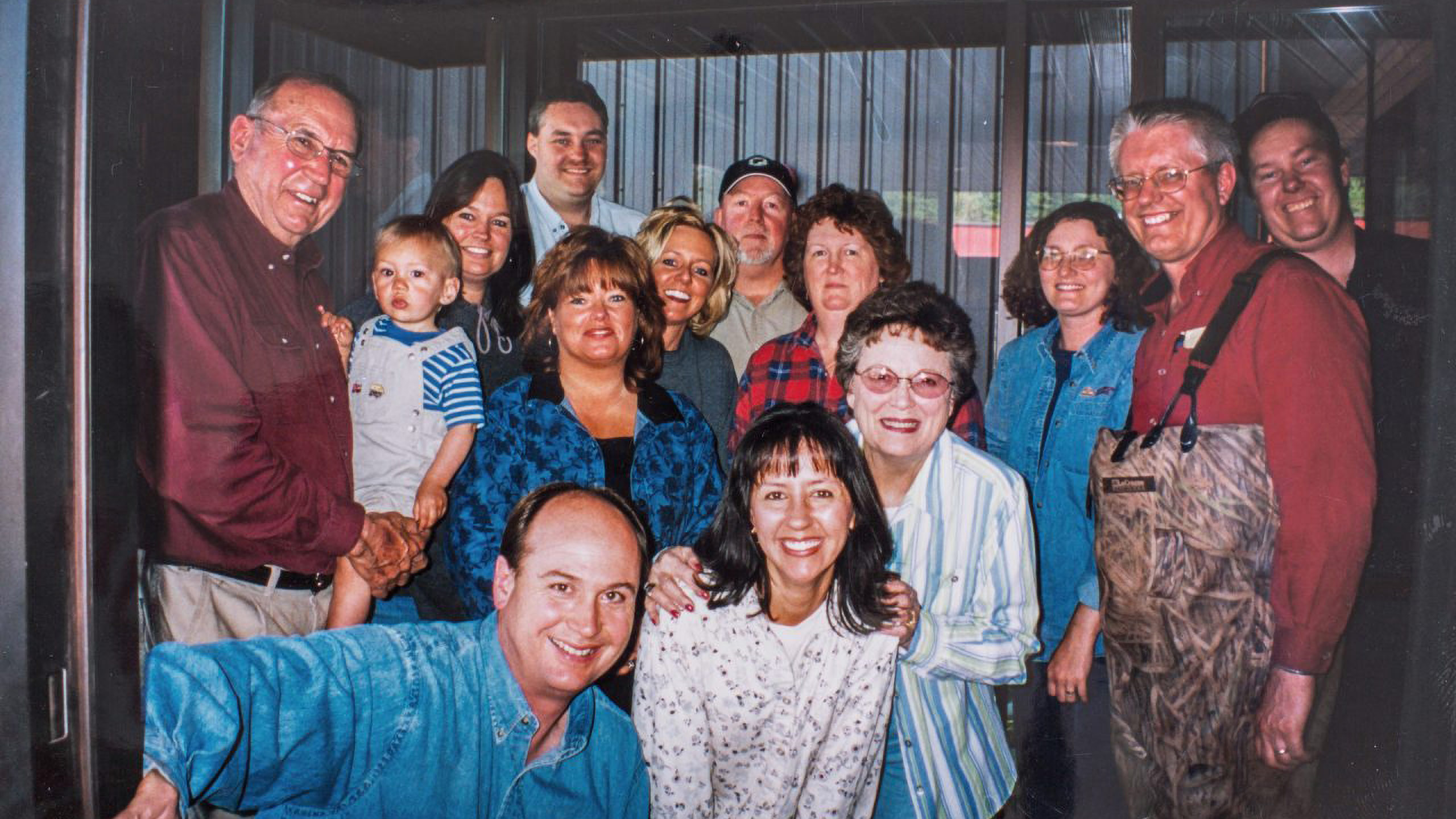
From its roots in Central Illinois’ coal mining industry, Solomon Colors has produced mineral pigments since the early 1900s. Founded in 1927 as Solomon Grinding Service, the company grew into a leading provider of coloring solutions for mortar and concrete.
At age 13, Robert Christopher Solomon, an orphan, is working in one of the first coal mines in Central Illinois.
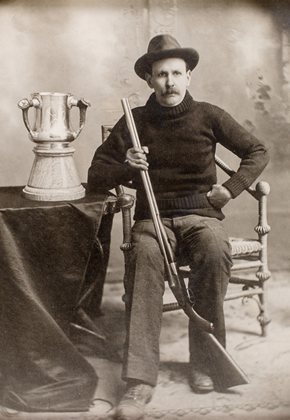
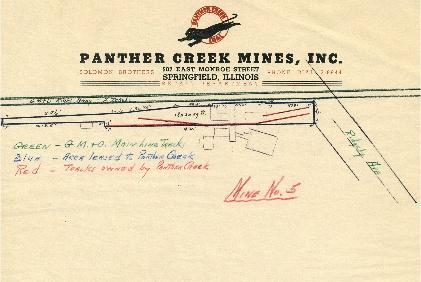
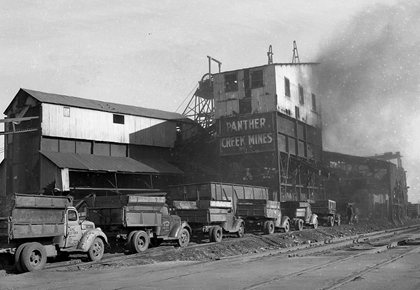
Robert Christopher Solomon becomes the original stockholder in the Co-Operative Coal Mining Company. The shaft is sunk at Eleventh St. and Ridgely Ave. It later becomes the location of Panther Creek Mine No. 5, the last mine to close in Springfield, owned by Robert Christopher’s son, Robert C. Solomon Jr.
July 28th 1882 - Robert C. Solomon Jr. is born.
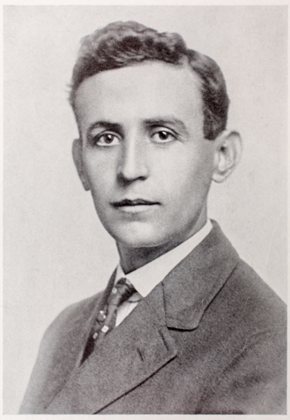
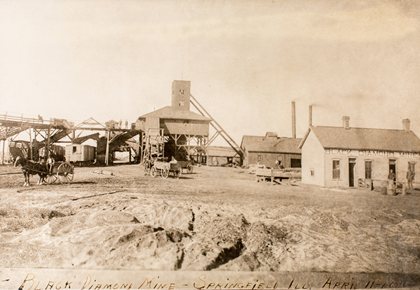
The Black Diamond Mine in Auburn, IL changes hands to Robert Christopher Solomon, who serves as mine manager.
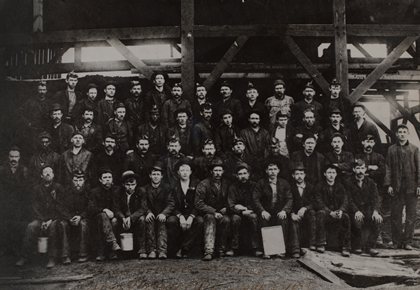
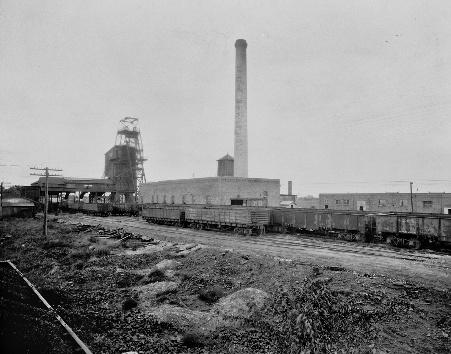
At age 18, Robert C. Solomon Jr. begins working with his father and brothers in the mining business.
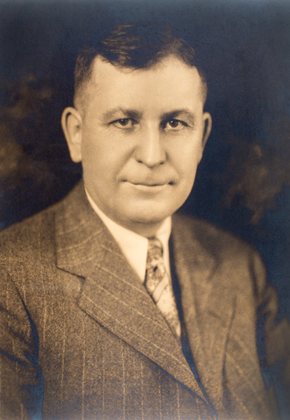
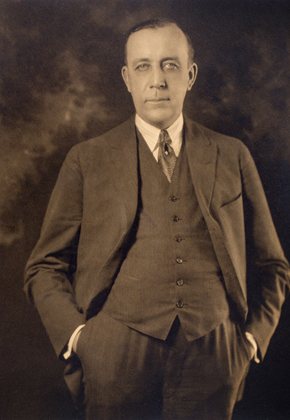
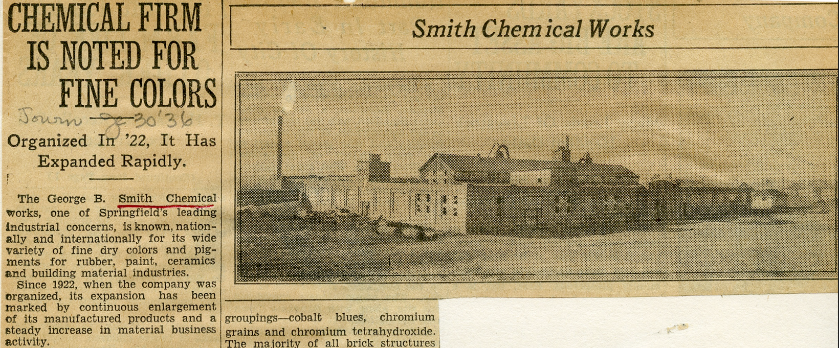
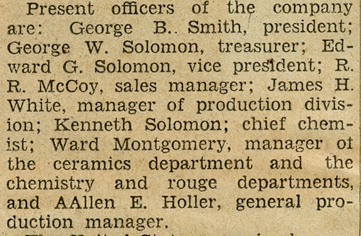
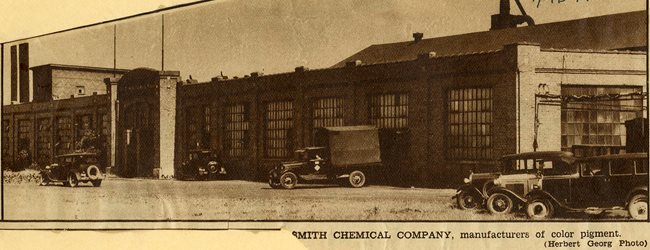
Robert C. Solomon Jr.’s brother, George W. Solomon, and a chemist named George B. Smith establish the George B. Smith Chemical Works in Springfield. They begin manufacturing pigments for dozens of industries, including the construction industry.
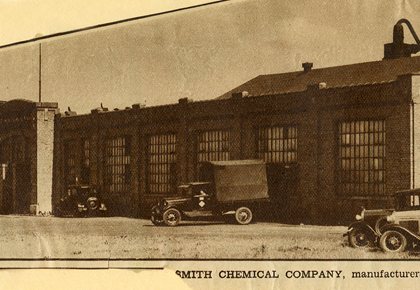
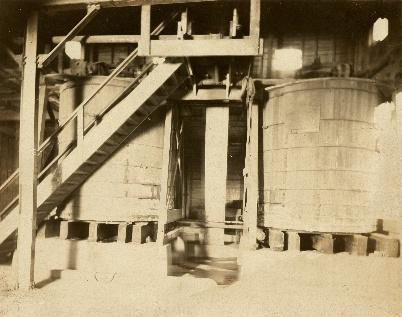
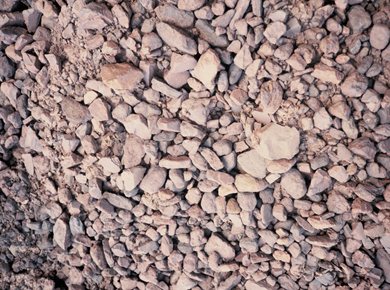
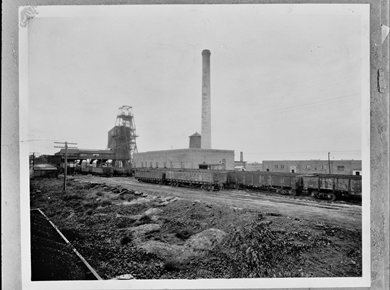
Solomon Grinding Service begins operation at 2720 South Eleventh St., Springfield, IL. Robert C. Solomon Jr. and his brothers look for ways to increase profits from the coal mines. Robert C. Solomon has the idea of pulverizing a mining byproduct, black carbonaceous slate that lies above the coal seams, to create pigments. In the beginning, Solomon Grinding Service is involved in the underground mining of coal as well as crushing, grinding, and blending various natural minerals, including red iron ore from Michigan and yellow ochre from Georgia. The majority of natural pigment is sold through George B. Smith Chemical Works.

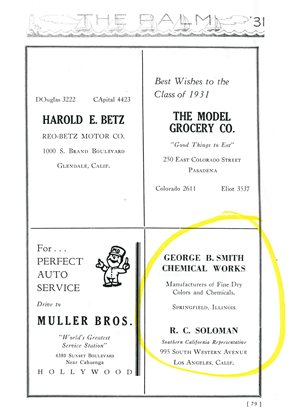
Robert C. Solomon promotes pigments in California under the George B. Smith Chemical Works name.
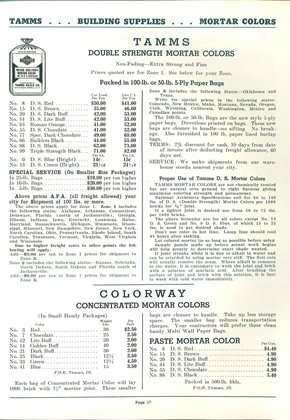
Solomon Grinding Service begins blending and grinding natural pigments and minerals for Tamms Silica Co. This is the beginning of a business relationship that lasts for the next 40 years.
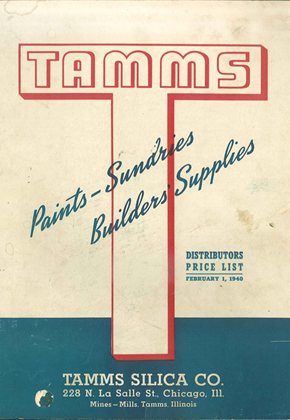
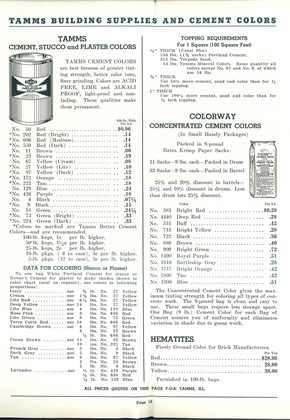
George B. Smith Chemical Works ends operations in Springfield. Loss of revenue from the Great Depression ultimately drives the decision. The Solomons and George B. Smith split ways, with an arrangement allowing Smith to use his name for new business affairs. The Solomons merge the assets into Solomon Grinding Service, which sells the color manufacturing tanks, filter presses, and chrome furnace to C. K. Williams Co. and keeps the Raymond mills and additional blenders for its operations.
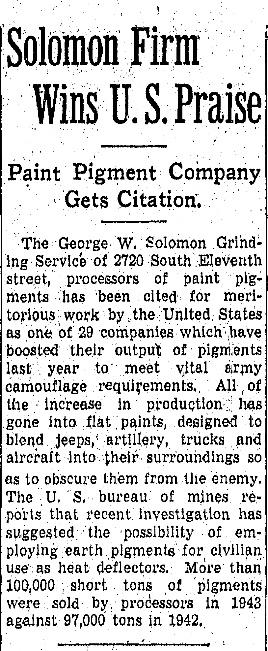
Solomon Grinding Service increases output of pigments for flat paints used to camouflage vehicles, artillery, and aircraft during the war.

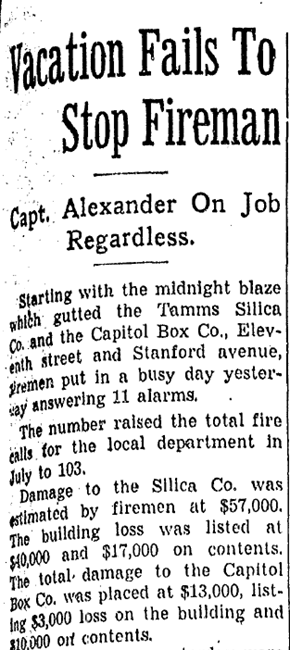
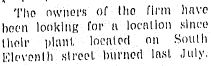
On July 27, 1944, fire burns part of the Solomon Grinding Service plant at 2720 South Eleventh St. Damages are estimated at around $60,000.
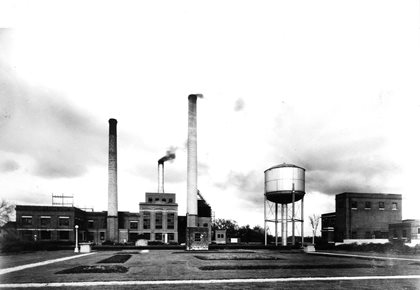
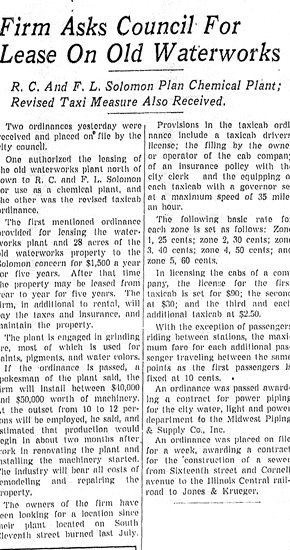
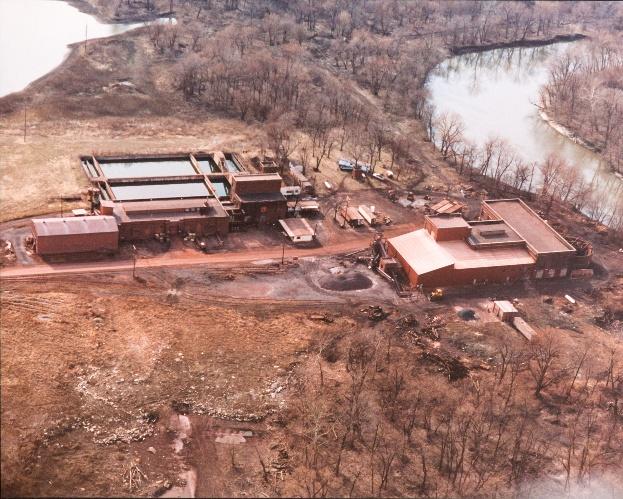
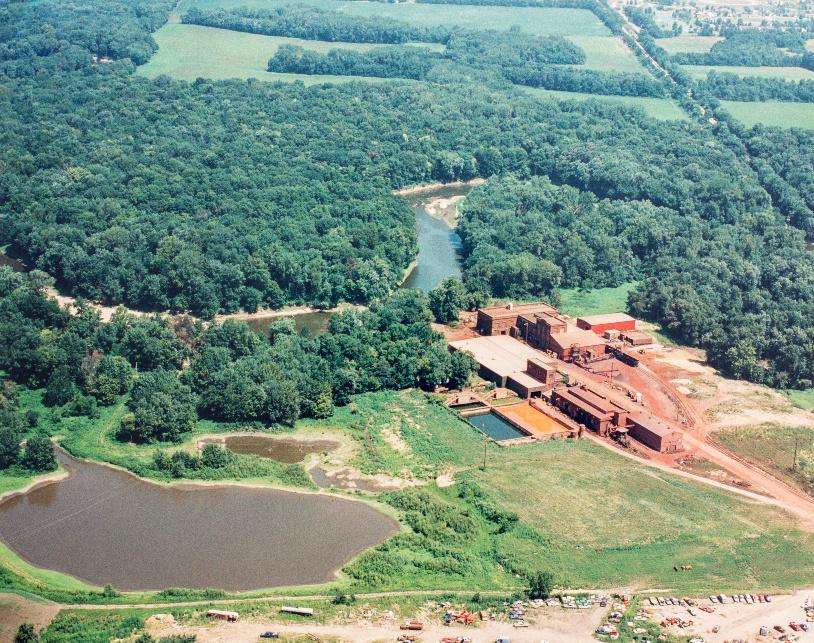
Solomon Grinding Service moves to its current location at 4050 Color Plant Rd., the site of Springfield’s old power and water treatment plant north of town, under a lease agreement with the City of Springfield. The company invests $50,000 in updated equipment and employs 12 people at the time. The firm grinds ore used for foundries, paints, pigments, and watercolors.
Panther Creek Mine No. 5, owned by Robert C. Solomon Jr., closes. It is the last coal mine in Springfield, IL.

Robert (Bob) Larson Solomon, son of Robert C. and Florence Solomon, grew up in the business. He begins working full time after graduating from the University of Illinois.
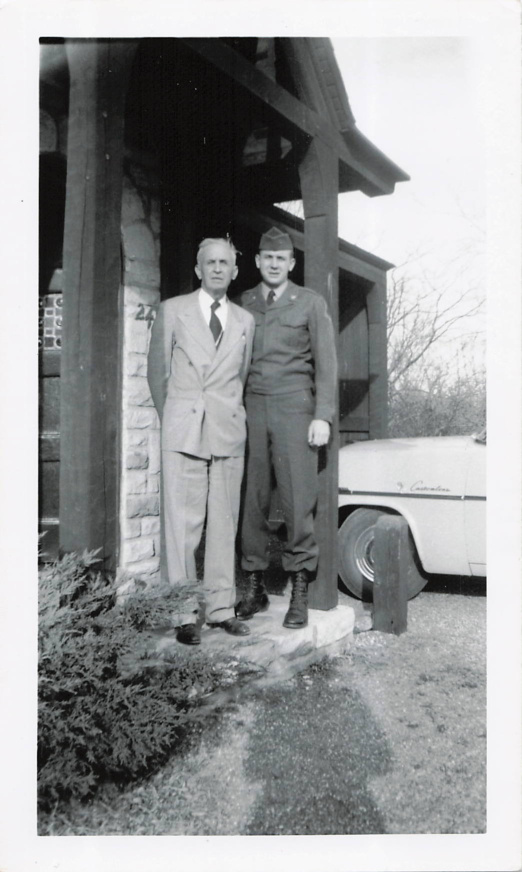
With the passing of Robert C. Solomon, his wife and business partner, Florence Larson Solomon, and their son, Robert (Bob) Larson Solomon, assume leadership of the company.
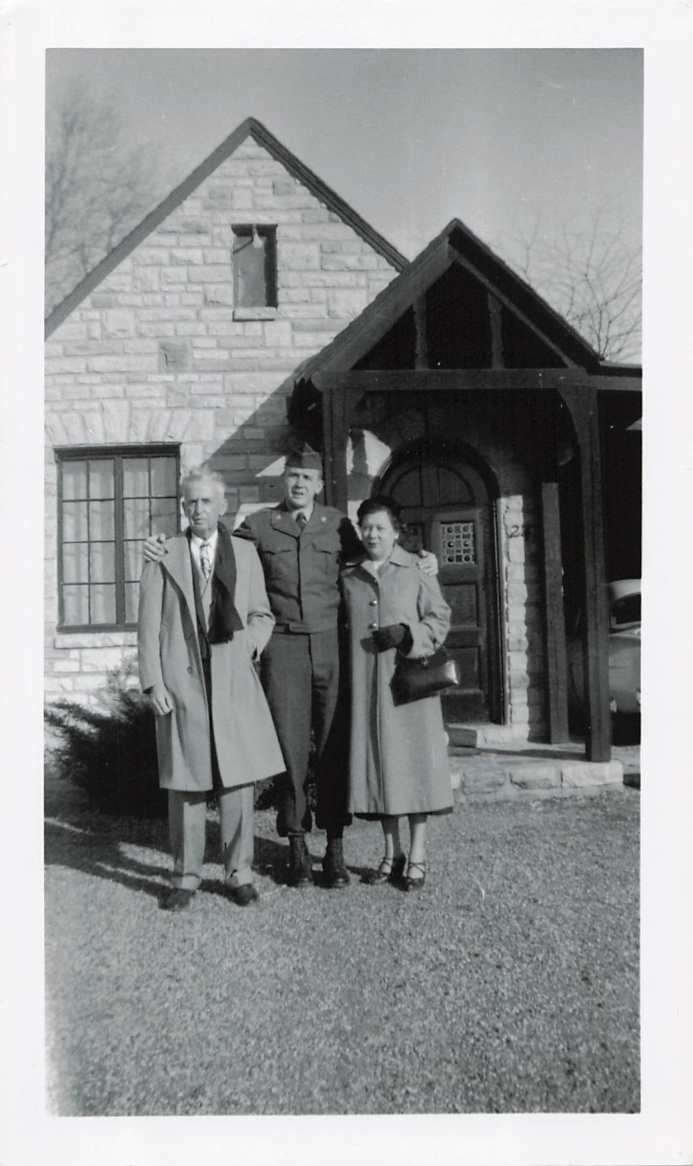
Robert C., Bob, and Florence Solomon.
Custom grinding of various minerals grows under Bob Solomon’s leadership, including hematite iron ore, yellow ochre, manganese oxide, zinc oxide, and ferrous carbonate. Bob upgrades the unloading of minerals from hopper train cars with a Tuxhoe. Beyond pigments, iron ore is sold to foundries and cattle feed companies, all under the Tamms brand name.

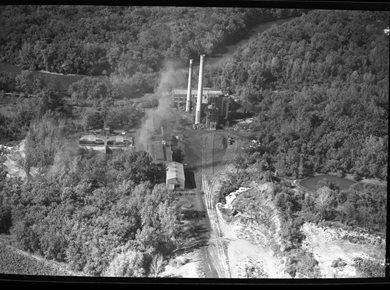
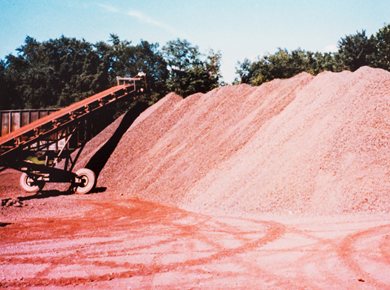
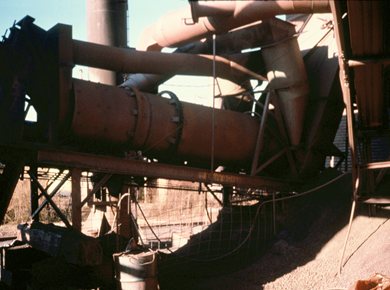
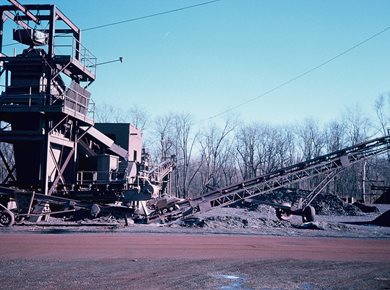
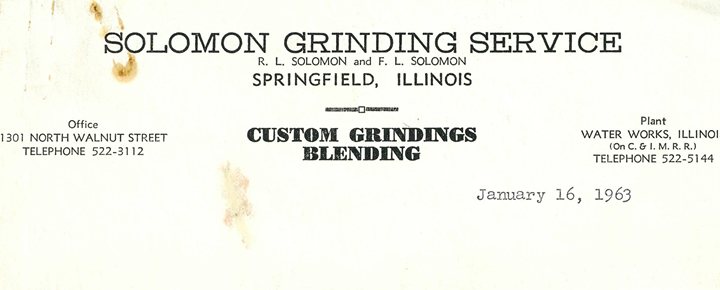
Tamms undergoes structural changes that reduce production volume for Solomon Grinding Service. Relying on private label business is no longer sustainable, so Bob Solomon makes a change to keep the company profitable and positioned for future growth.

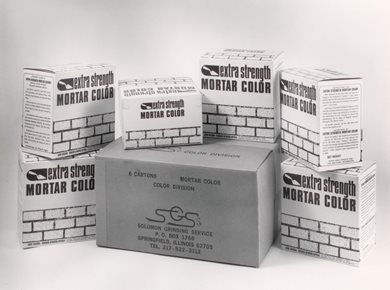
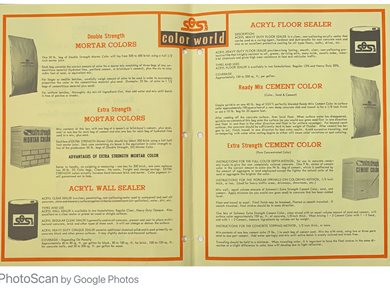
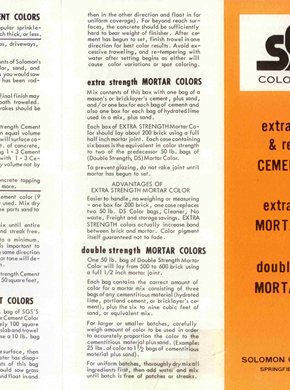
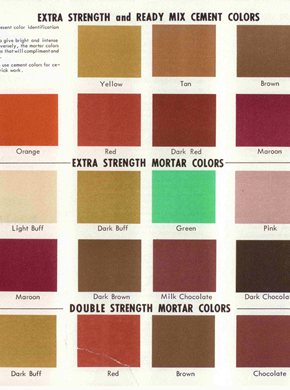
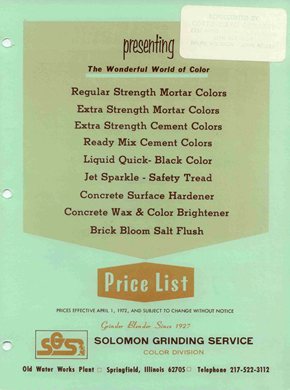
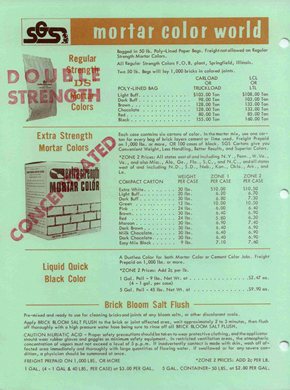
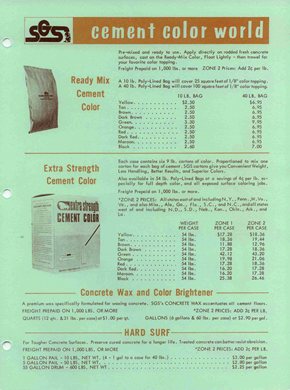
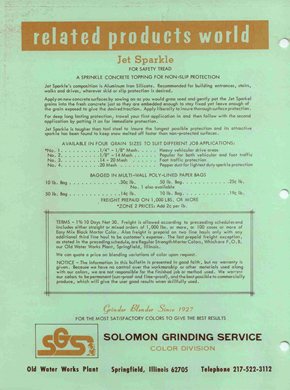
On October 14, 1971, Solomon Grinding Service introduces SGS Mortar and Concrete Colors. For the first time in 45 years of business, Solomon Grinding Service markets directly to dealers and distributors under the SGS (Solomon Grinding Service) brand. Bob Solomon sells his home to invest in new equipment, packaging, raw materials, and marketing materials.
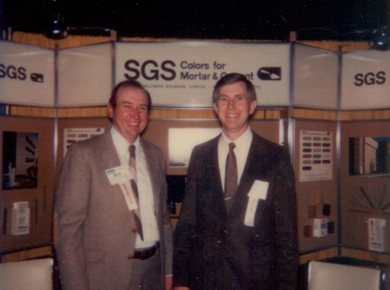
Bob Solomon and John Keller.
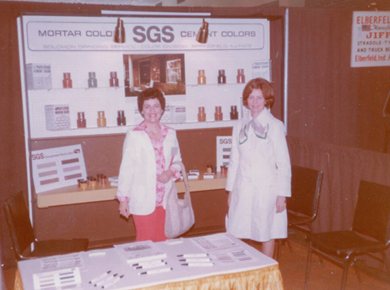
Donna Solomon and Marilyn Keller.
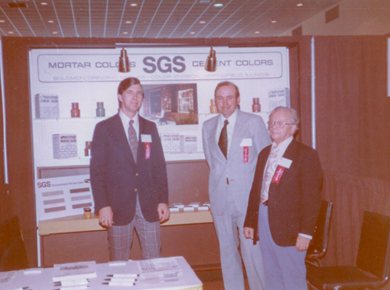
John Keller, Bob Solomon and Ralph Holemon.
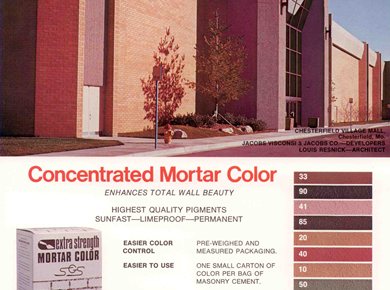
Cotto-Waxo Company of St. Louis, Missouri becomes the factory sales representative for SGS Mortar and Cement Colors. A full-time lab man is employed to ensure quality control, and large product inventories are maintained across all colors to support the new distribution network. The company also expands its product offering with liquid carbon black for mortar and ready-mix concrete applications.
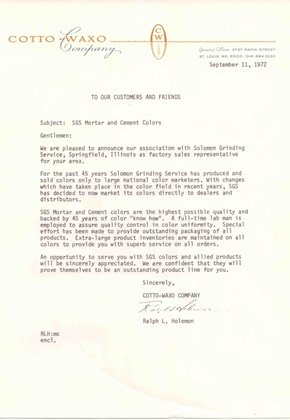
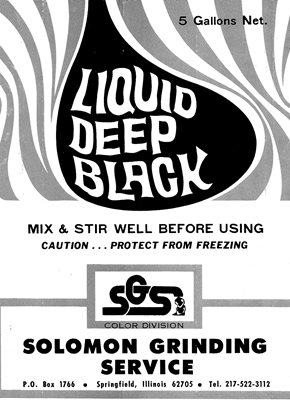
Third-generation family member Rich Solomon joins the company full time, contributing across all areas of the business with a focus on marketing and sales.
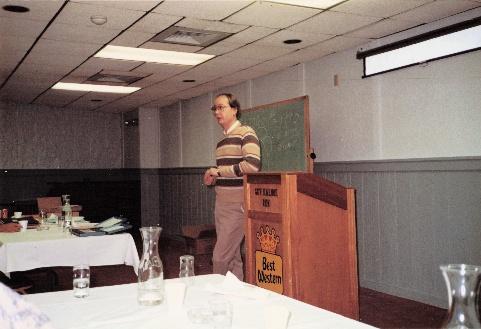
Rich Solomon leading sales meeting.
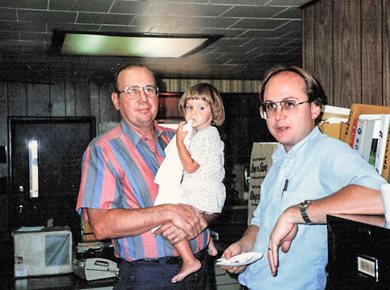
Bob and Rich Solomon in the old trailer office.
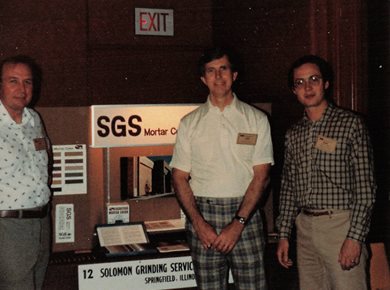
Bob Solomon, John Keller and Rich Solomon.
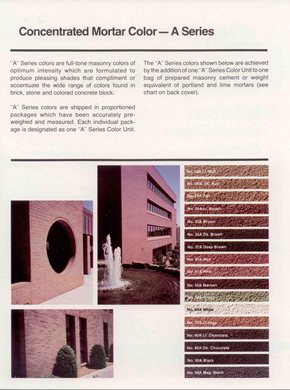
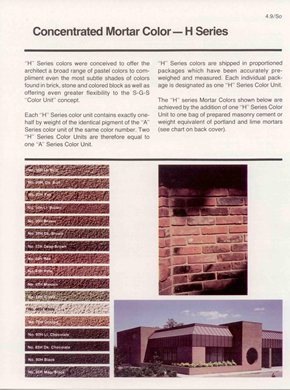
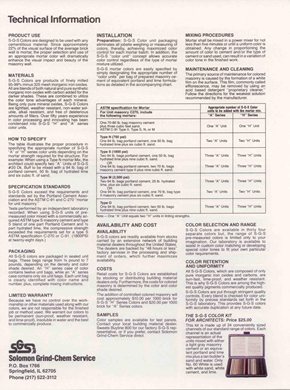
The mortar color line expands with H Series Mortar Colors.
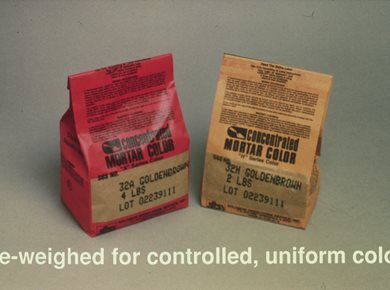
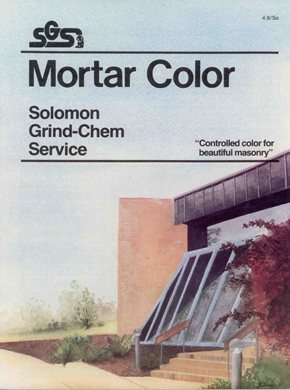
ColorFlo Liquid Pigment is developed. It is the highest solids liquid color in the industry and still holds that distinction today.
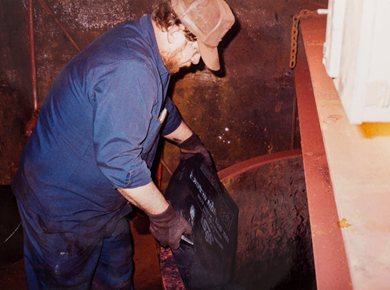
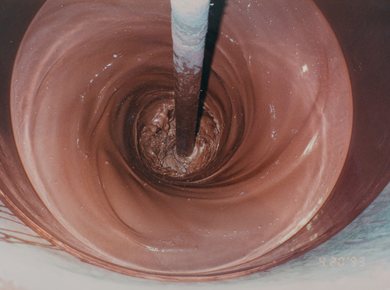
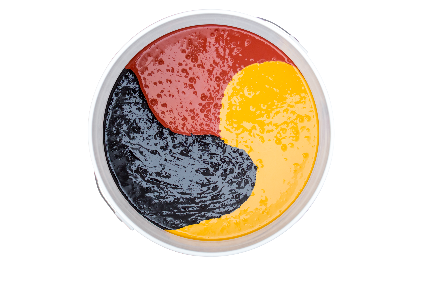
On April 13, 1987, fire burns part of the plant. Bob and Rich Solomon investigate moving to a different location.
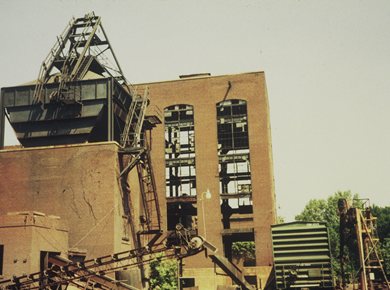
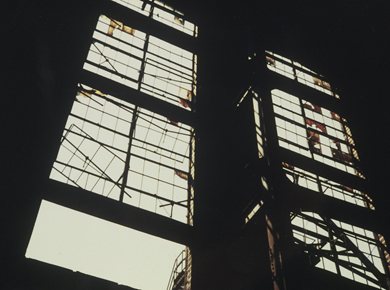
Watch the original news coverage of the fire:
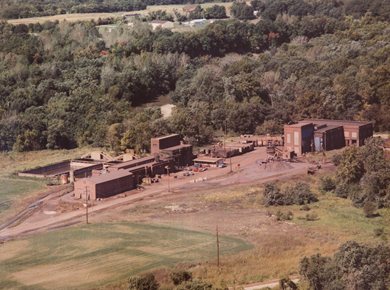
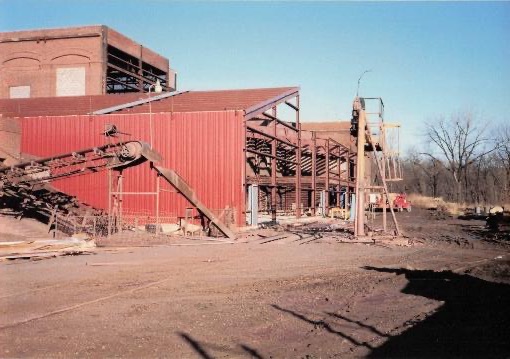
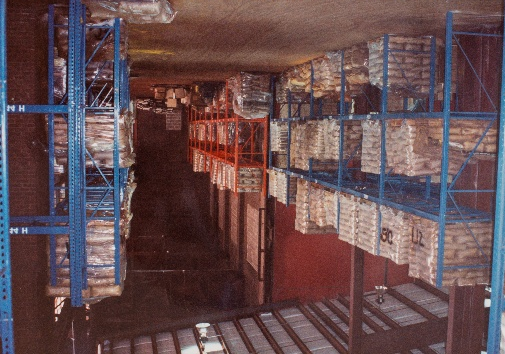
The City of Springfield sells the land and buildings to Solomon Grind-Chem Service, helping make the decision to stay and rebuild in Springfield, IL. A new building is constructed for storing raw materials and finished goods, including a new color lab and a mortar color packaging area.
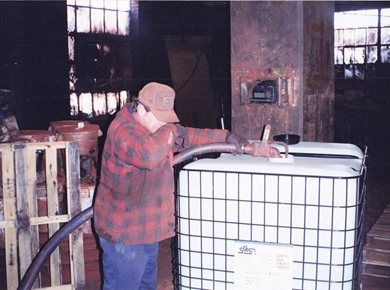
Joe Smith fills a tote with Liquid Color.
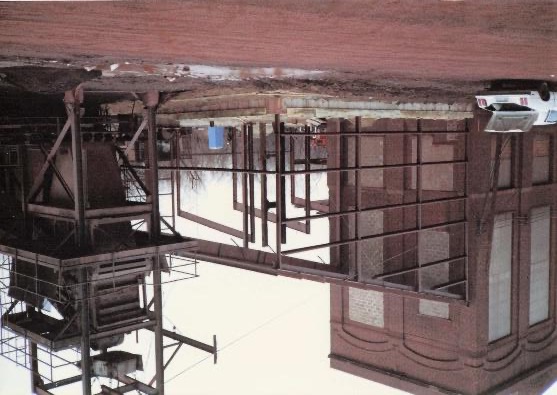
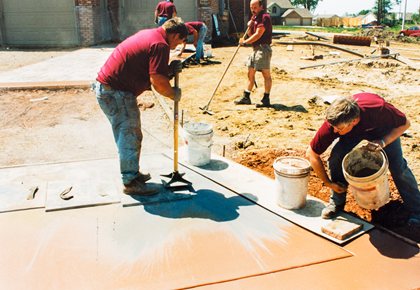
The Dry Shake Color Hardeners product line is introduced.
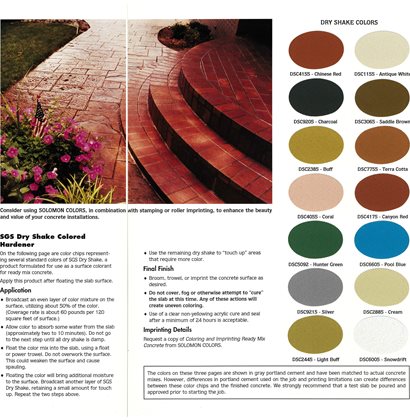
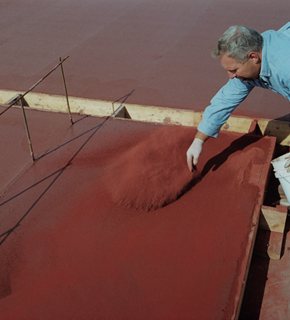
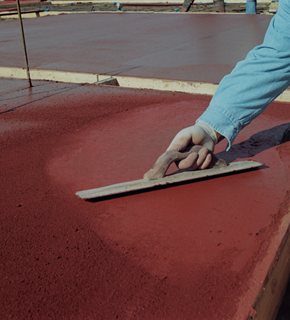
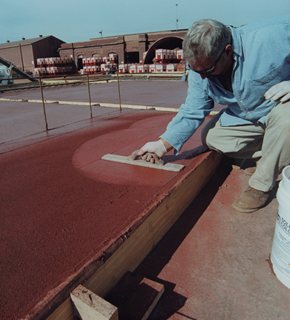
The Colored Release product line is introduced.
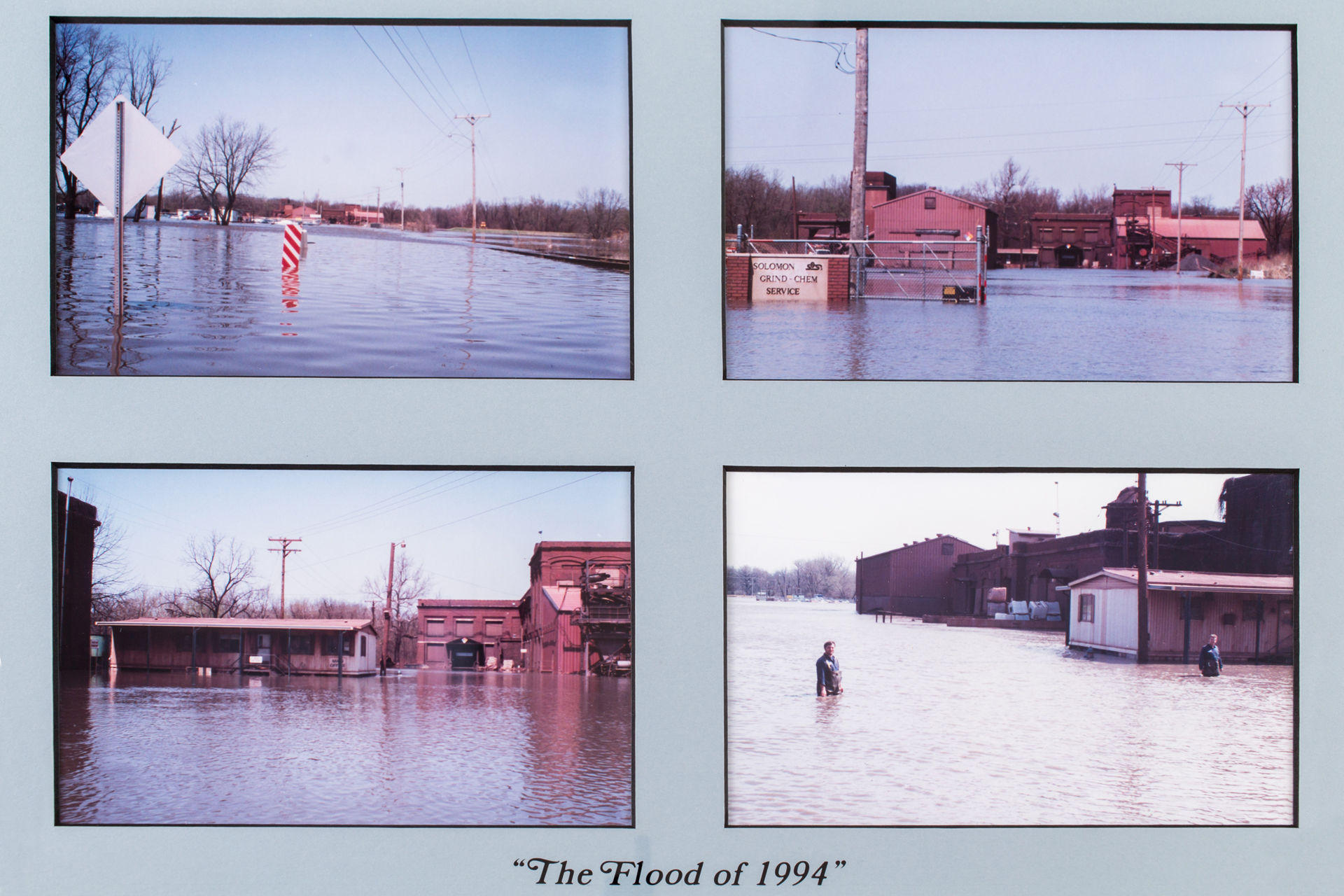
A major flood on the Sangamon River forces Springfield employees to go to work by boat.
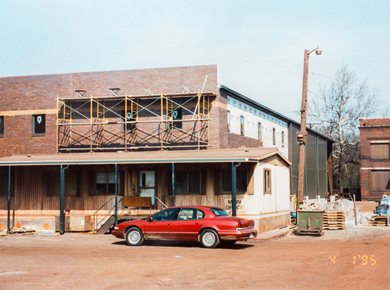
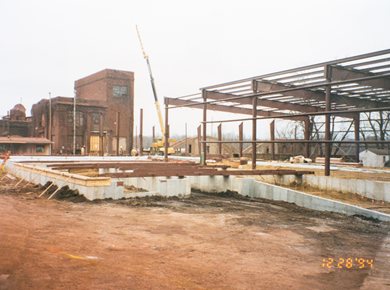
A new corporate office and shipping warehouse are built in Springfield. Until this expansion, the main office was a double-wide trailer, and most finished packaged products were stored in old semi trailers. Adam Solomon tells his dad, Rich Solomon, “We are now a real company.”
Solomon becomes an ESOP. Bob Solomon learns about the concept of an Employee Stock Ownership Plan and loves the idea. Rewarding dedicated employees with shares of stock, so they benefit from the company’s success, has created a positive culture the company is proud of.
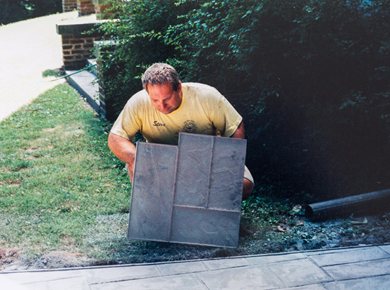
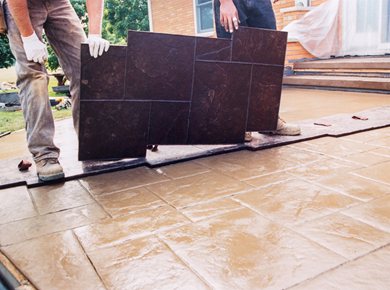
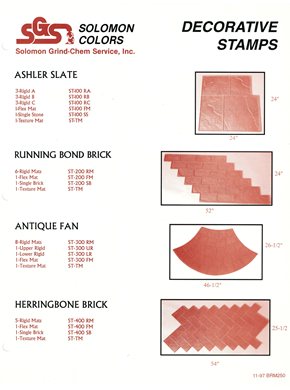
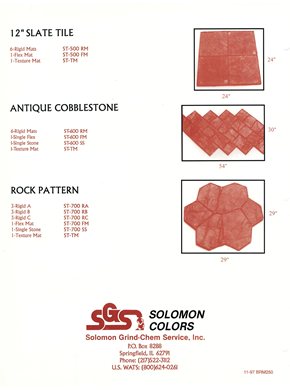
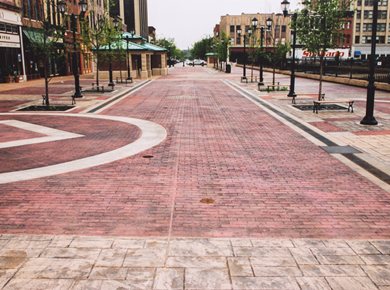
Decorative stamps for stamping concrete are introduced.

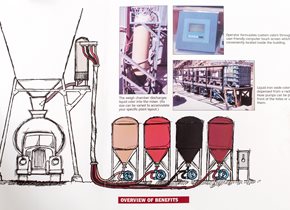
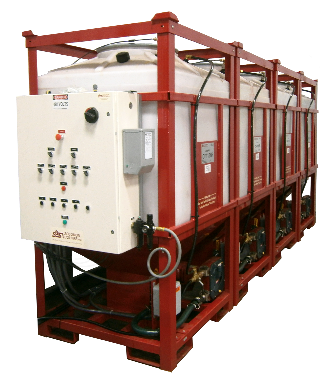
ColorSelect Systems are introduced. Solomon begins designing, manufacturing, and maintaining automated color dispensing systems for the Ready Mix and Concrete Products industries. This decision transforms the company and sets it on course for steady growth.
See the full dispensing systems timeline →
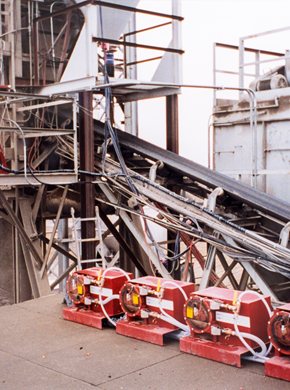
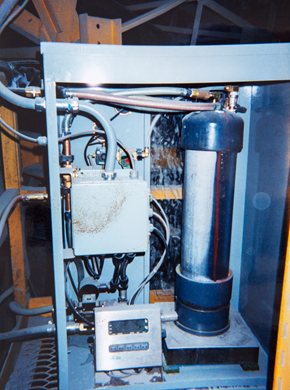
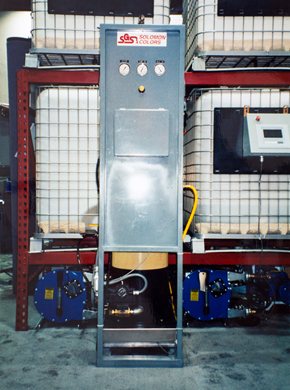
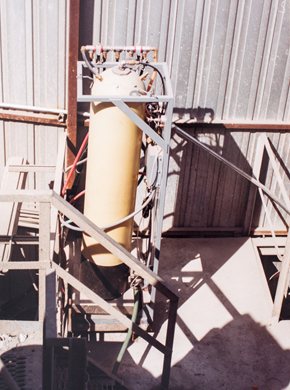
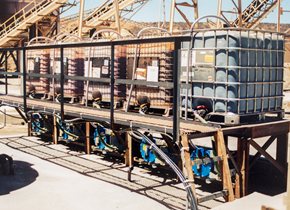
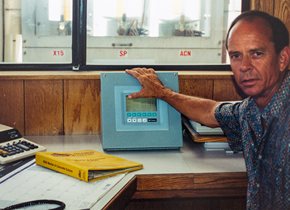
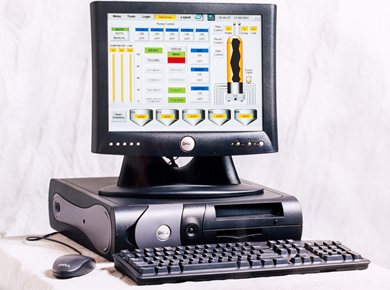
Solomon Grinding Service introduces an upgraded ColorSelect system for Ready Mix with PC control. The Windows-based display lets operators select colors by name or number and view the entire loading process in real time.
See the system in action in footage from when it was introduced:
The QuickColor Bucket Filling System is introduced. It allows distributors and ready-mix suppliers to batch liquid color on demand into buckets.
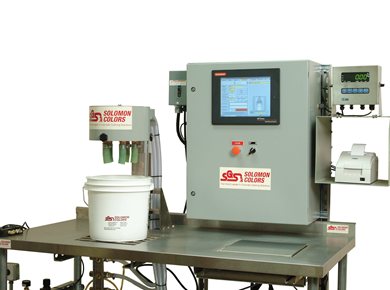
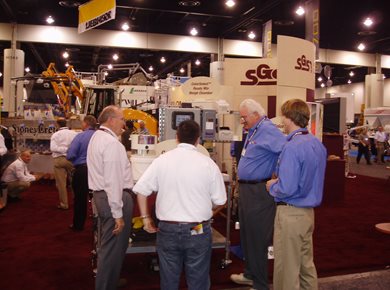
Bob Solomon going over the new Liquid Bucket Table at World of Concrete.
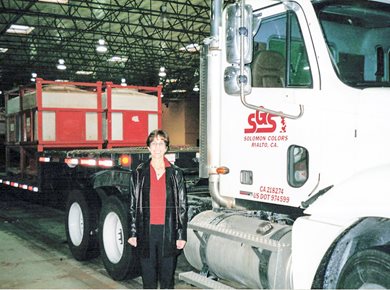
Solomon sells its custom grinding operation and officially changes its name to Solomon Colors. Because of the success of the ColorSelect automated color dispensing systems, Solomon Colors decides to focus on promoting liquid color for the Ready Mix and Concrete Products industry. A liquid color manufacturing facility is built in Rialto, California to better serve customers in the western United States.
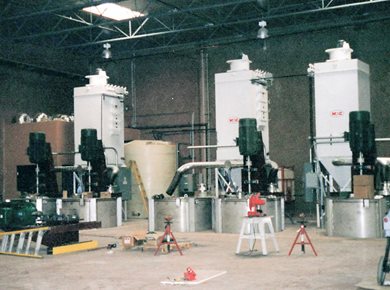
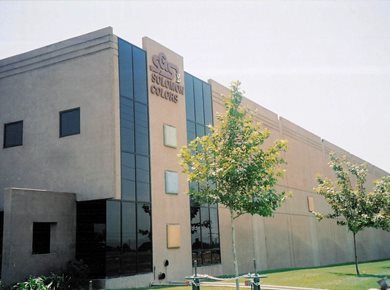
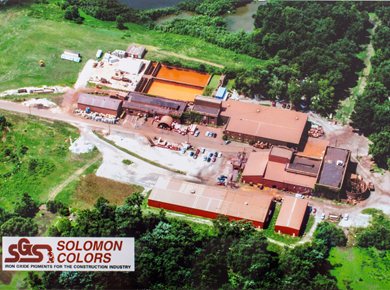
The Single Color System is developed. With the rapid expansion of big-box stores like Walmart and Kroger, Solomon Colors answers the need for a simple delivery system for large concrete jobs, dispensing pre-blended color directly into a ready-mix truck.
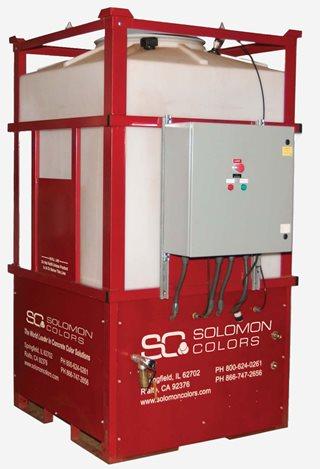
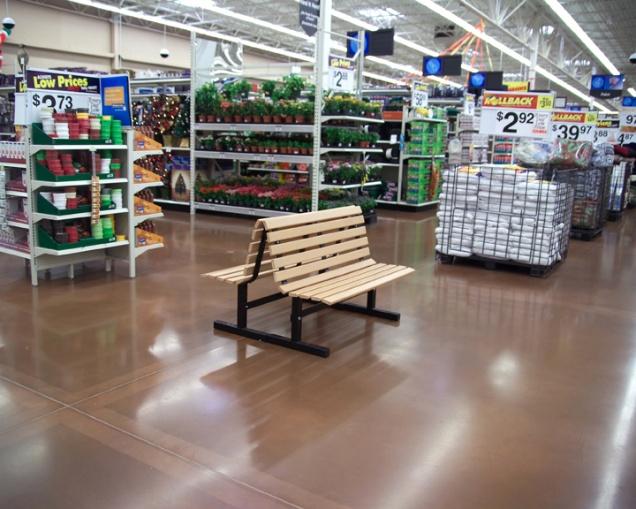
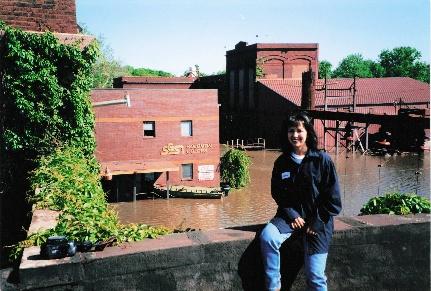
A major flood on the Sangamon River forces employees to go to work by boat.


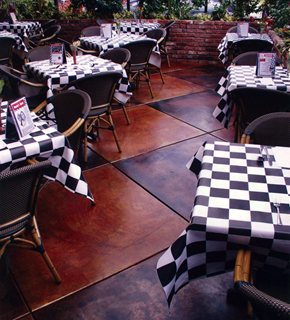
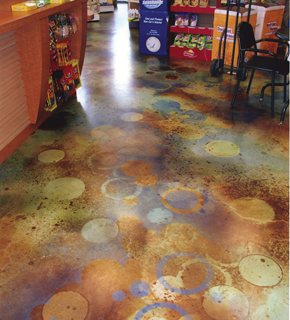
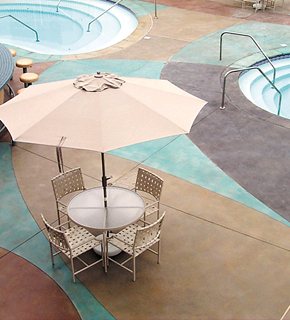
Solomon Colors offers its Acid Stain line to the industry. Second-generation ColorSelect Pro liquid dispensing for the ready-mix and concrete products industry also launches.
High Performance ColorFlo Liquid Color is introduced, offering higher tinting strengths decreasing the amount of pigment needed to achieve the same shade.
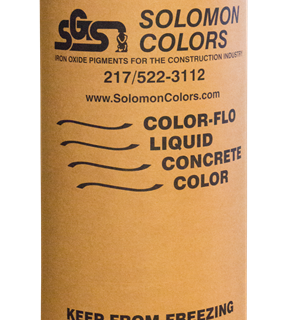
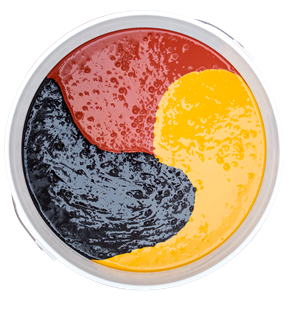
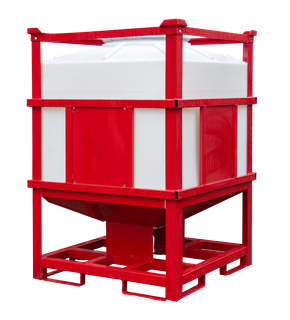
A new production facility in Springfield, IL is built for manufacturing ColorSelect and QuickColor dispensing systems, along with a new production area for packaging iron oxide. Solomon Colors also introduces a dry batch system for pre-blended mortar manufacturers.

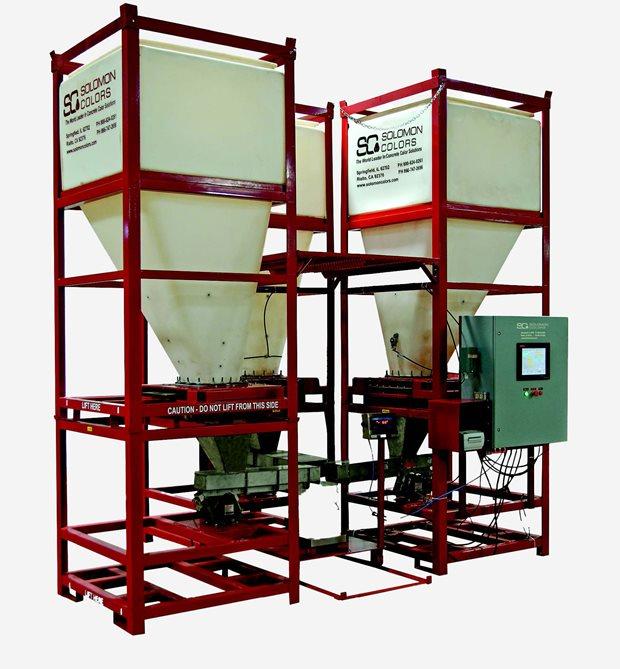
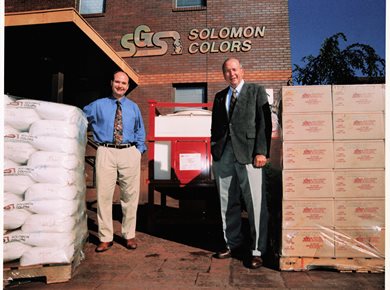
Rich and Bob Solomon.
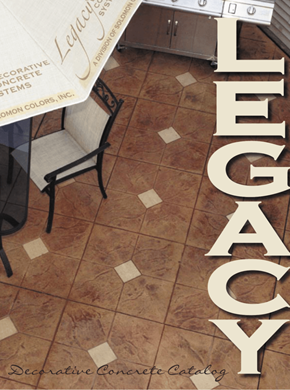
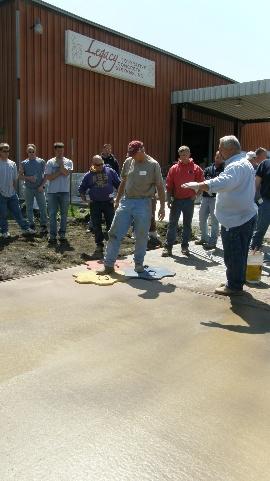
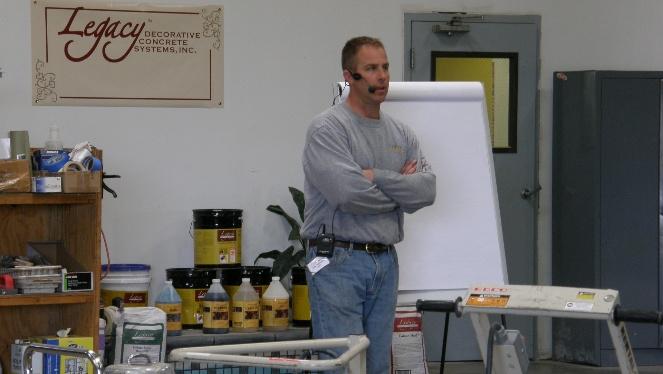
Solomon Colors introduces Legacy Decorative Concrete Systems. Legacy adds new overlays, stains, sealers, stamps, and stencils to the Solomon family of products. Solomon Colors also creates a team to focus on decorative concrete and contractor training.

Adam Solomon becomes the fourth-generation family member to join the company full time. Like his father, Rich Solomon, and his grandfather, Bob Solomon, Adam grew up in the business, working summers since 6th grade.
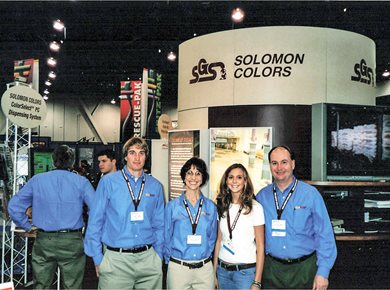
Adam, Gina, Kim and Rich.

Bob and Adam Solomon.
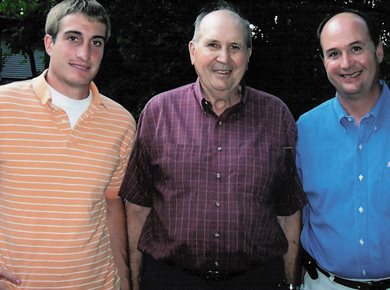
Three generations: Adam, Bob and Rich.
A major facility expansion in Springfield, IL adds a new shipping warehouse, a liquid color manufacturing area, and a dry blending and packaging area for concrete overlays and color hardeners. Daily output of liquid color increases by 240,000 pounds.
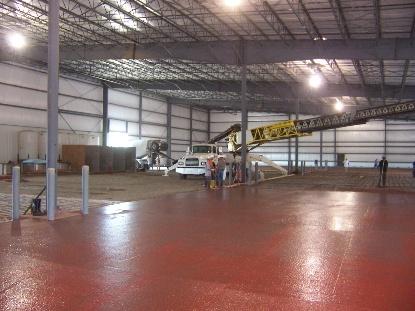
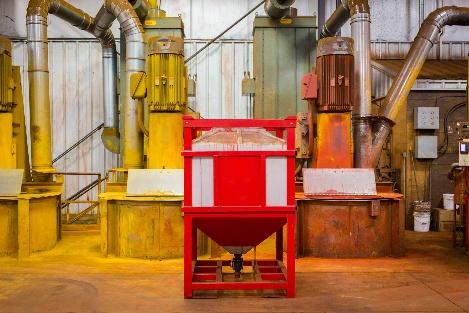
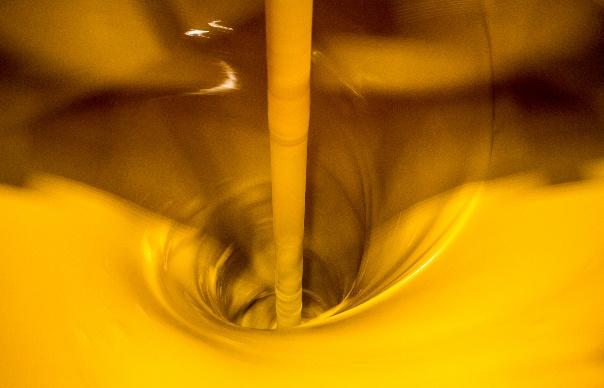
Solomon Colors acquires Brickform. Founded in 1971 during the early days of modern decorative concrete, Brickform is a leader in urethane stamps, stains, and overlays. With the addition of the Brickform brand, Solomon Colors becomes the largest independently owned decorative concrete products supplier in the world.

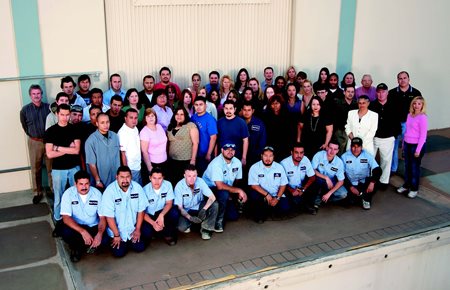
To mark the Brickform acquisition, Solomon Colors created "Hip to be a Stamper," a music video parody celebrating decorative concrete.
Flooding along the Sangamon River forces Springfield employees to go to work by boat.


Partners with decorative concrete expert Bob Harris to introduce the Paladiano™ "Wonders of the World" stamp line, featuring patterns cast directly from historic pavements in Venice, Paris, Athens, London and more.
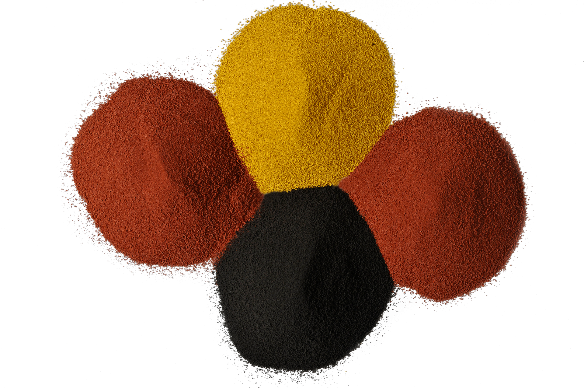
Solomon Colors introduces ColorFlo SG Granular Pigment, using its own in-house formula with an outside spray-drying company. The company quickly realizes that competing in the granular market will require investing in its own manufacturing capability.
Brickform’s Rancho Cucamonga manufacturing plant and Solomon’s Rialto liquid color manufacturing are combined into one location in Rialto, California. Bringing everything under one roof improves customer service and creates a more efficient process.
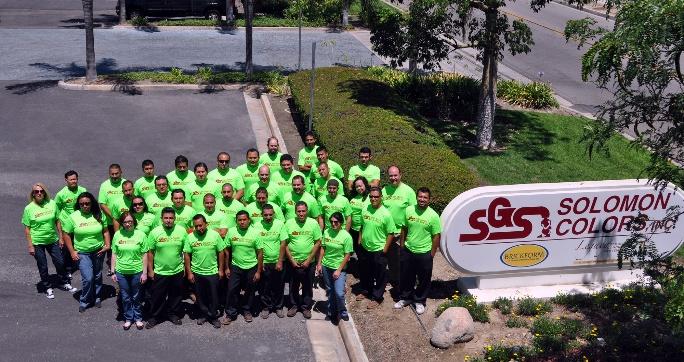
Solomon Colors introduces the QuickColor Granular Bag and Bucket System. It allows distributors to produce thousands of colors on demand into a repulpable bag or plastic bucket.
DAY1® Finishing Aid wins the Product Innovation Award from Architectural Products magazine for advancing finishing performance in decorative and architectural concrete applications.
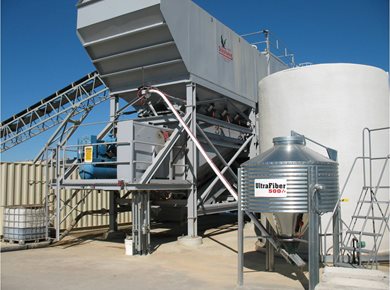
Solomon Colors acquires UltraFiber 500, the only concrete fiber on the market that accepts stains and dyes, making it perfect for decorative concrete. UltraFiber is also the only fiber that comes with an efficient fiber dispenser, allowing ready-mix suppliers to add fibers directly into the ready-mix truck at the push of a button. It’s a perfect fit for Solomon Colors.

Solomon Colors acquires Lythic, an innovator in colloidal silica technology for polishing concrete and finishing aids. DAY1 finishing aid quickly becomes a fast-growing product in the Lythic line and is recognized as a new and innovative product at the World of Concrete show in Las Vegas.
In December, a flood on the Sangamon River reaches the highest level on record, forcing employees to go to work by boat. Luckily, the flood happens during the slowest part of the year, between Christmas and New Year’s.


Solomon Colors moves its Rialto, California manufacturing plant to a new location north of town, just south of Interstate 210. The location has a larger warehouse plus undeveloped land next to the building for future growth.
A new state-of-the-art sealer manufacturing facility opens in Springfield, IL. It includes a tank farm that allows solvents to be delivered by tanker truck and pumped automatically into blending tanks. The process saves time and helps Solomon Colors and the Brickform brand become a larger player in the concrete sealer market.
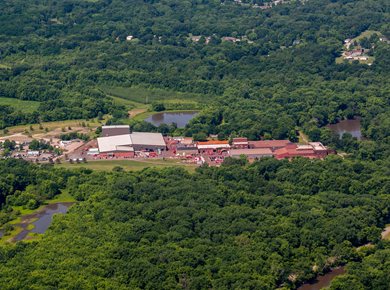
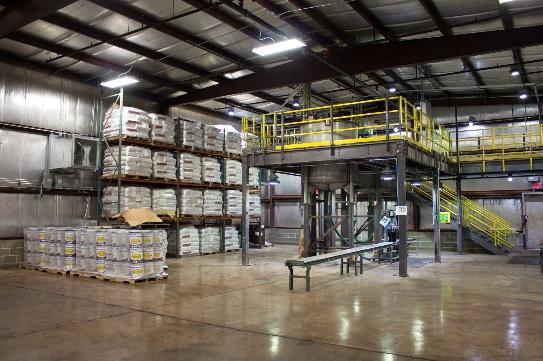
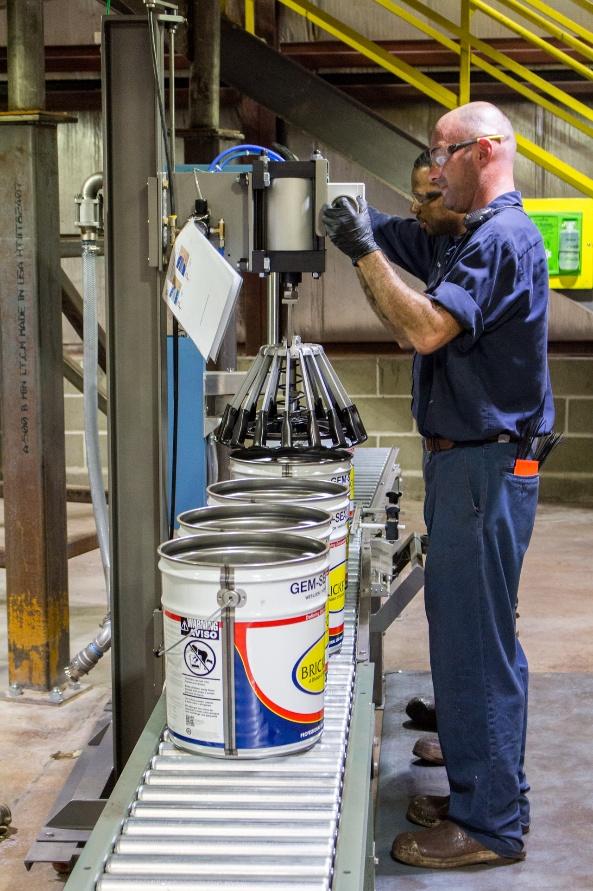
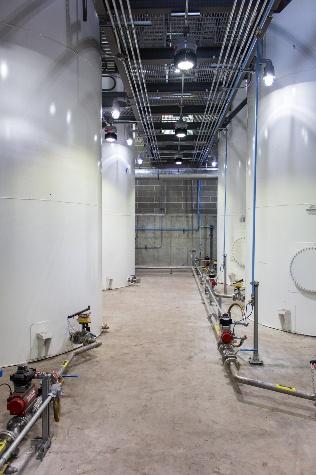
A new granular pigment manufacturing plant opens in Springfield, IL. After years of testing, Solomon Colors introduces a new patented way of manufacturing granular pigment. The first bag of SG Granular pigment rolls off the line on March 21. The growth of granular pigment helps Solomon Colors become recognized as an important supplier of pigments in the concrete market.
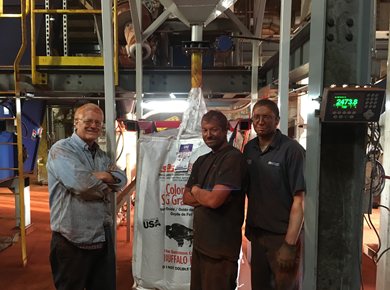
Scott, Thomas and Charles.
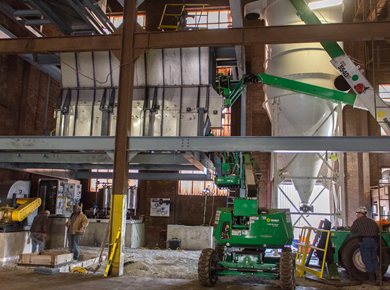
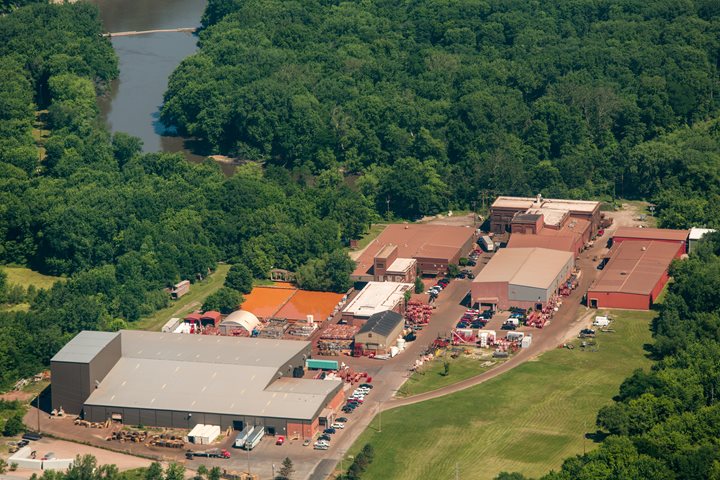
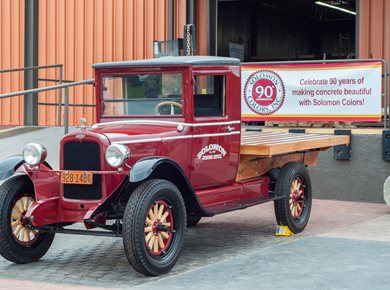
Solomon Colors celebrates 90 years in business. To celebrate, the team restores a 1927 dump truck. The vintage vehicle goes on to appear in local car shows, parades, and trade shows.


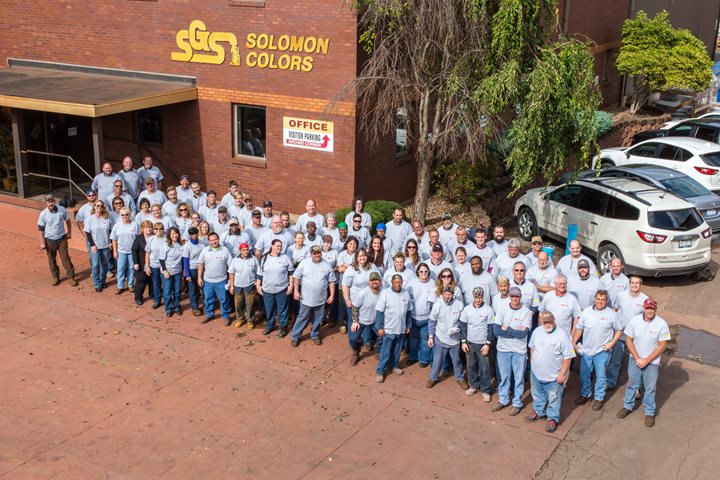
Featured on Illinois Stories, a PBS program hosted by Mark McDonald, showcasing the Solomon Colors plant and operations in Springfield, Illinois.
Solomon Colors acquires ARCAL (ACC), a manufacturer of concrete surface and in-form retarders for the concrete industry. The combination of colored concrete and exposed aggregate finishes is becoming a growing trend in the decorative concrete market.

Solomon Colors introduces the GTS (Granular to Slurry) System for the ready-mix industry. The system weighs out granular color, disperses it into a slurry, and dispenses the color directly into a ready-mix truck. This easy-to-use, dust-free system allows ready-mix suppliers to batch any color on demand in minutes.
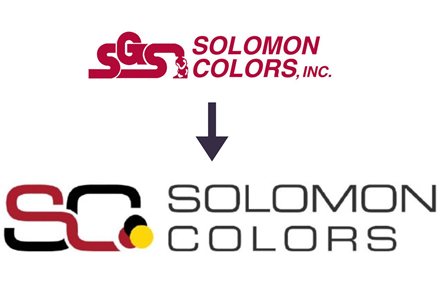
Solomon Colors unveils a refreshed company logo, updating the brand identity while honoring its long-standing history.
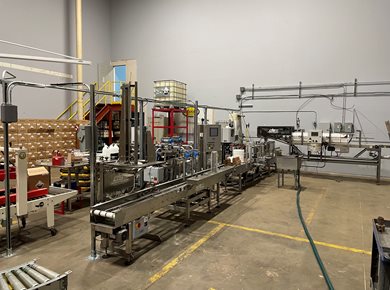
A new blending and automated five- and one-gallon filling line opens in Rialto, California. It improves production capacity and efficiency for DAY1, Select-Etch surface retarders, water-based sealers, and stains.
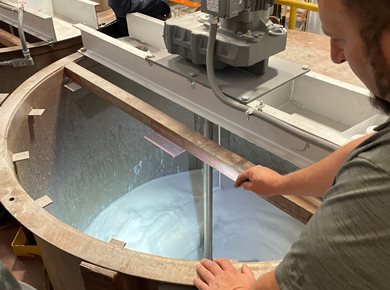
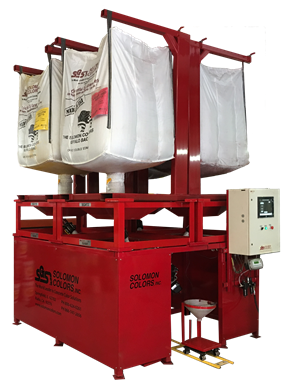
Solomon Colors introduces the GT-1 Granular Dispensing System for Concrete Products Manufacturers. It fills a void in the concrete products industry, and Solomon Colors becomes an all-in-one granular pigment supplier that can build and service color dispensing equipment.
Brickform.com is relaunched, giving our decorative concrete products a dedicated home and making it easier for contractors to access stamps, stains, sealers, overlays, and training resources.
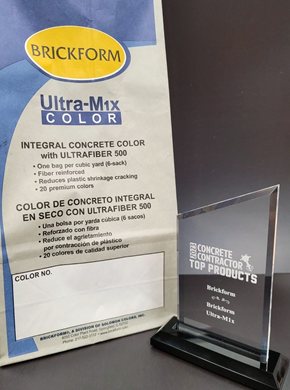
Concrete Contractor magazine recognizes Brickform’s Ultra-M1x™ Color with a Top Products award for combining integral color and fiber reinforcement in one convenient dissolvable bag.
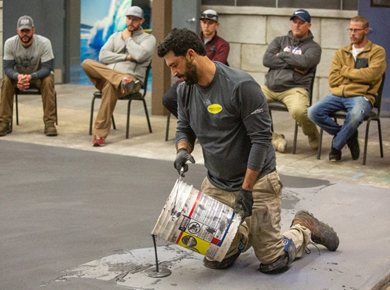
Brickform® resumes in-person training events, reconnecting with contractors and hands-on education following the COVID-19 pause.
Solomon Colors introduces GTS 2.0, the second-generation ColorSelect Granular to Slurry System, continuing its investment in automation and improved color dispensers. New improvements include a single, front-loading access point for granular pigment and a more compact design that makes shipping easier.
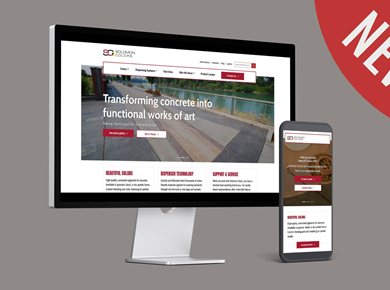
SolomonColors.com is relaunched with a modern design and improved navigation, enhancing the user experience and making product information easier to access.
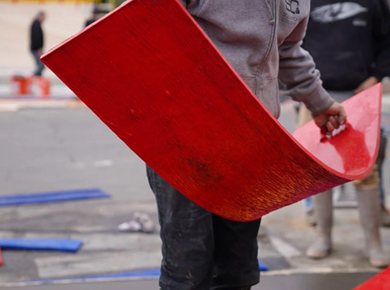
Brickform introduces ProSeries™ stamps, featuring a lighter, thinner design that improves handling and makes it easier for contractors to create authentic concrete impressions.
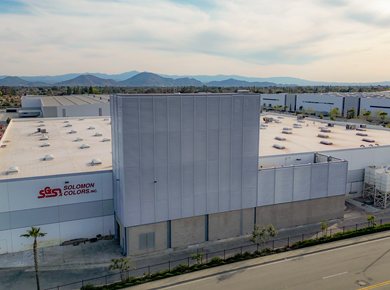
A new spray dryer plant opens in Rialto, California, adding 40 million pounds of annual granular capacity. It is the first and only granular pigment production facility on the West Coast of the United States, strengthening the supply chain for the construction industry.
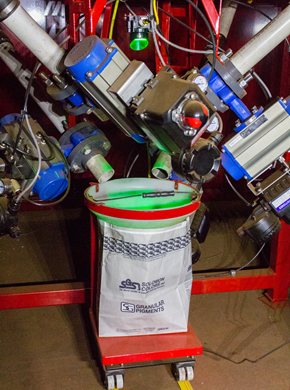
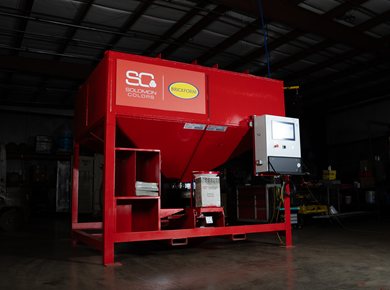
Solomon Colors introduces GBS 2.0, its second-generation Granular Bagging System. Improvements include front-side loading of granular pigment, a trolley system that raises the finished bag for better ergonomics, and a more compact design for customers with low ceiling heights.
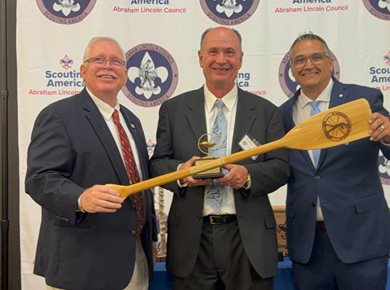
Solomon Colors Chair and CEO Rich Solomon receives the 2026 Trailblazer Award from the Abraham Lincoln Council, Scouting America. The award recognizes community leaders who live the principles of the Scout Law in their professional and personal lives.
Solomon Colors introduces the GT-Cube, a more compact Granular Dispensing System for Concrete Products Manufacturers. Designed for facilities where space matters, this self-contained ColorFlo Granular pigment dispenser delivers next-generation precision for concrete products manufacturers, boosting efficiency and quality.
Solomon Colors celebrates 100 years. Looking ahead, Solomon Colors will expand its Rialto, California facility, doubling warehouse space for finished goods and raw materials. The expansion will include a training center providing training and technical support for contractors and distributor partners.
To celebrate 100 years, CEO Rich Solomon reflects on the company's history and growth from his grandfather's founding vision to today.